
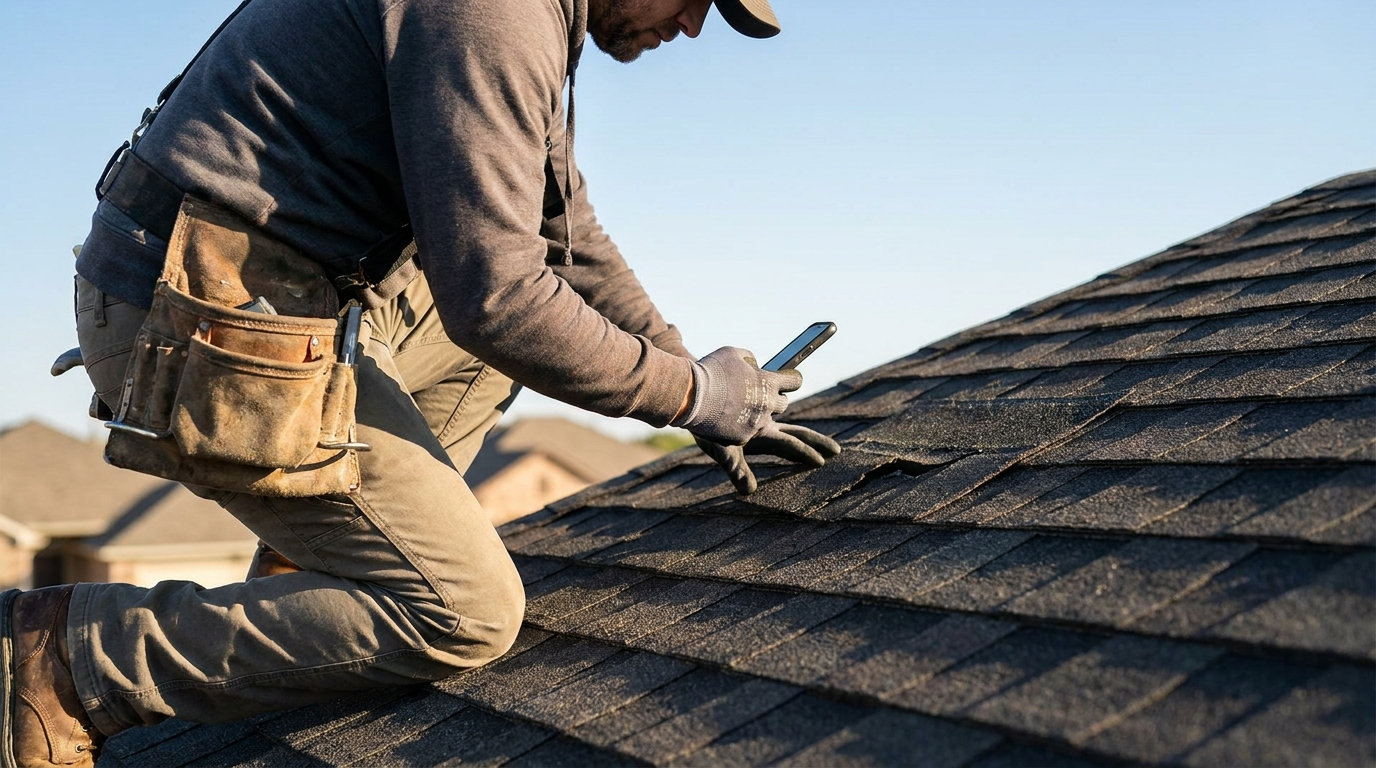
"Trust me, it needs work" is a hard sell. Homeowners can't get on the roof, and they can't see what you see. The fix isn't a better pitch. It's documentation that makes the problem obvious for them.
Photograph the problem, not just the roof
A photo of the whole roof tells a homeowner nothing. A photo of the exact lifted shingle, with a close-up of the cracked seal underneath, tells the whole story. Capture both: a wide shot for context and a tight shot for proof.
Work slope by slope so nothing gets missed:
- Missing, lifted, or curling shingles
- Flashing and pipe-boot failures
- Soft or spongy decking
- Valley and ridge wear
- Granule loss in the gutters
Pin each finding to its spot
Drop a pin on the exact defect in the overview photo and attach the close-up. Now the homeowner sees a map of their roof with each problem marked, not a pile of photos they have to interpret. That clarity is what turns "I'll think about it" into a signed estimate.
Organize by slope
Group your findings by roof slope so the report reads cleanly whether it's going to a homeowner or an insurer. A slope-by-slope layout also makes it obvious when a full replacement is justified versus a spot repair.
Leave with a report, not a promise
Generate a branded PDF or a one-click link before you leave. The homeowner can open it on their phone, share it with a spouse, and approve it without a second visit. It also becomes your record of pre-existing conditions if anyone questions the work later.
A clean inspection report does three jobs at once: it sells the repair, it protects you, and it makes you look like the professional on the street who actually documents their work. See how it works for roofing crews.
For a deeper look at why pinned evidence beats a photo dump, read Pin the Spot, Not the Whole Photo.