
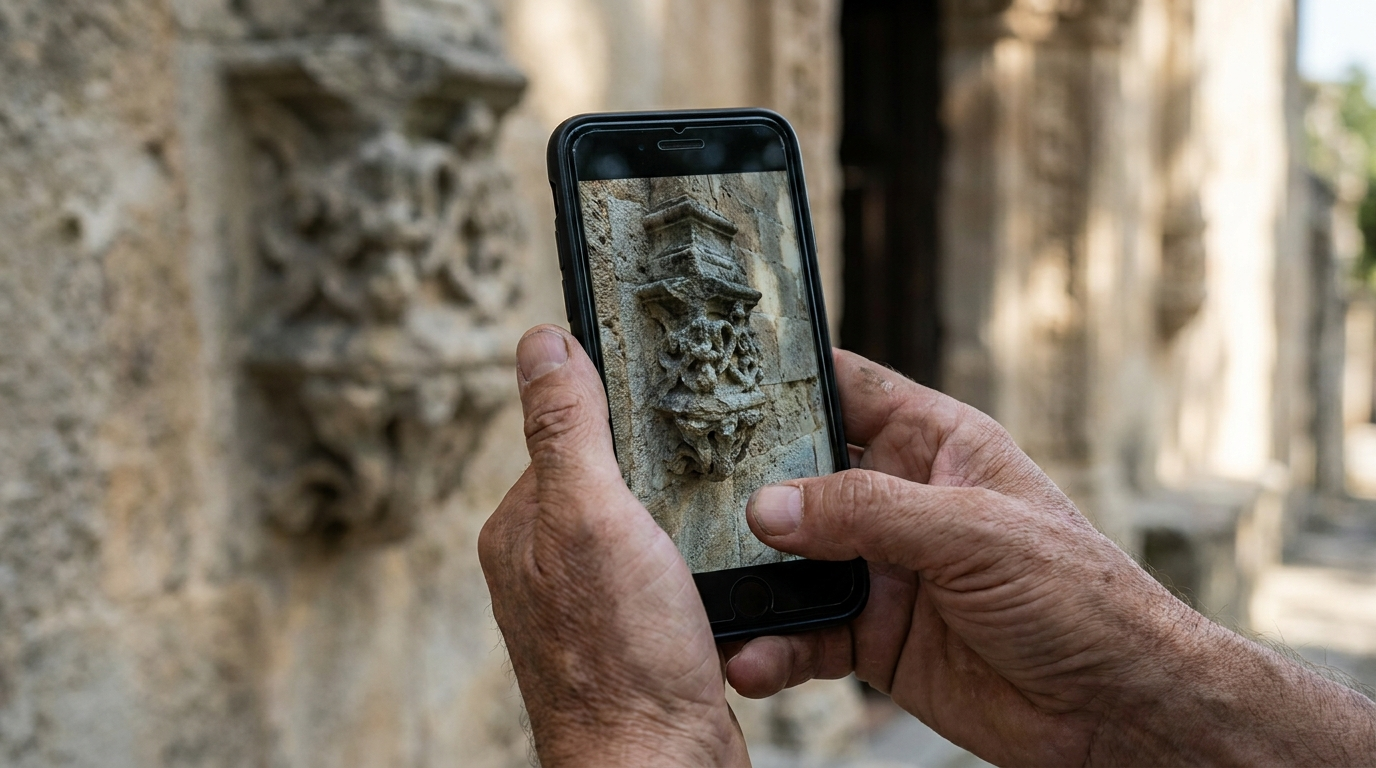
Most "documentation" is really just a photo dump: a folder of 200 pictures with no order, no labels, and no way to tell what any of them show. It technically captured the job. It also handed the hard part, figuring out what's what, to whoever opens it next.
The photo-dump problem
A loose photo set has three failure modes:
- Nobody can tell where a close-up was taken
- Important shots get lost between dramatic ones
- The person reviewing it has to reconstruct the story themselves
That last one is the killer. An adjuster, a client, or an inspector who has to do work to understand your photos is an adjuster, client, or inspector who slows you down.
What a pin adds
A pin anchors a close-up to an exact location on an overview photo. Instead of "here's a crack, somewhere," it's "here's the crack, on this spot, with the detail attached." The location and the evidence travel together.
That small change does a lot:
- The reviewer understands the photo instantly
- Your sweep is more complete, because pinning forces you to work the whole area
- The record is unambiguous if anyone questions it later
Faster reviews, faster approvals
When the person on the other end can understand your documentation at a glance, everything downstream gets faster, approvals, payments, sign-offs. See Visual Proof That Gets Estimates Approved and Get Paid Faster with Documentation.
A record that protects you
A pinned, time-stamped report is also the cleanest defense against disputes. It shows exactly what was there and when, no reconstruction required. That's the difference between documentation that works for you and a folder that just sits there.