
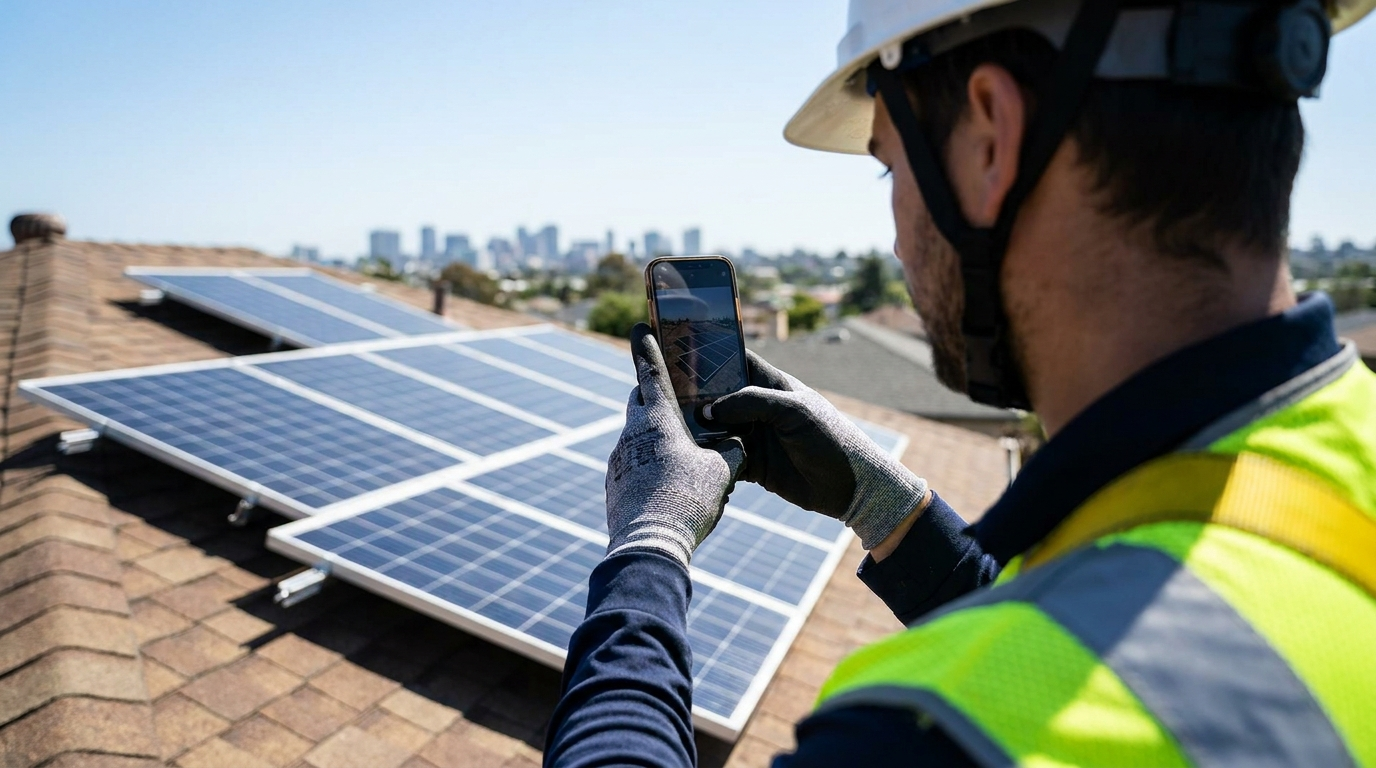
Solar jobs generate a lot of photos, and most of them end up useless in a camera roll. Pre-existing roof damage, conduit runs, panel placement: if it isn't tied to a location, it can't help you later. Pinning each detail keeps the survey, the install, and the proof in one place.
Survey before you install
A good site survey prevents change orders. Pin the conditions that design and crews need to see:
- Pre-existing roof condition and damage
- Obstructions and shading
- Proposed panel and array placement
- Conduit and wiring runs
- Mounting and flashing details
When the design team works from a pinned survey instead of a loose photo set, fewer surprises show up on install day.
Document the install as you go
Pinned install photos are your proof of workmanship. Capture mounting, flashing, and electrical connections tied to their exact spots. If a callback comes in six months later, you have a dated record of exactly how the job was done.
Keep the whole job in one record
The strength of pinning is continuity: the survey and the install live in the same job, so you can show the before-and-after in one report. Share it with the homeowner or the authority having jurisdiction as a read-only link or a branded PDF.
Protect against callbacks
Most callbacks come down to "was it like that before?" A pinned, time-stamped survey answers that instantly, which protects your margin and your reputation.
See how it comes together for installers in Elevations for Solar. For more on why a documented record cuts callbacks, read Reduce Callbacks with Photo Records.