
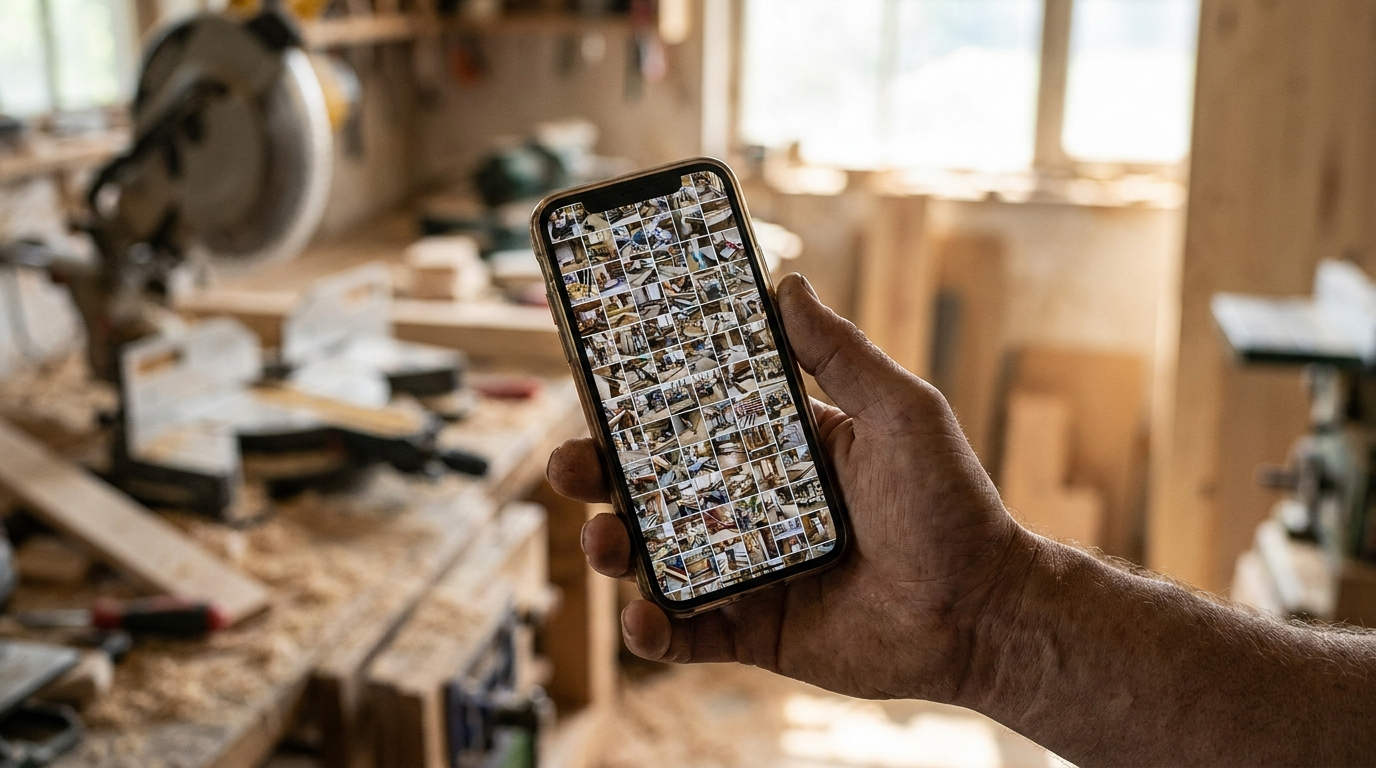
Almost every crew starts the same way: document jobs with the phone camera roll. It''s free, it''s already in your pocket, and for a while it''s fine. Then the job count grows, the team grows, and the camera roll quietly turns from a tool into a liability.
Why the camera roll fails at scale
A camera roll has no structure. Photos from five jobs blur together by date. There''s no way to tie a close-up to a location, no way to label anything, and no way to share a clean record without scrolling through everything else on your phone.
Signs you''ve outgrown it
- You can''t find the photo you need without scrolling for five minutes
- Two people on the crew have different photos in different places
- A client or adjuster asked for proof and it took real effort to assemble
- You''ve lost a dispute, or a payment, because you couldn''t produce a clear record
What real documentation adds
Moving up doesn''t mean more work. It means the photos you already take get structure: pinned to locations, labeled, organized by job, and ready to share as a report. The capture habit is the same; the payoff is everything downstream. See The Photo Documentation Workflow Every Trade Should Use.
Making the switch painless
The right tool works the way you already do, capture from your phone in the field, finish on a laptop if you want, share without making anyone create an account. If switching tools adds steps, it won''t stick. If it removes them, you''ll wonder why you waited.