
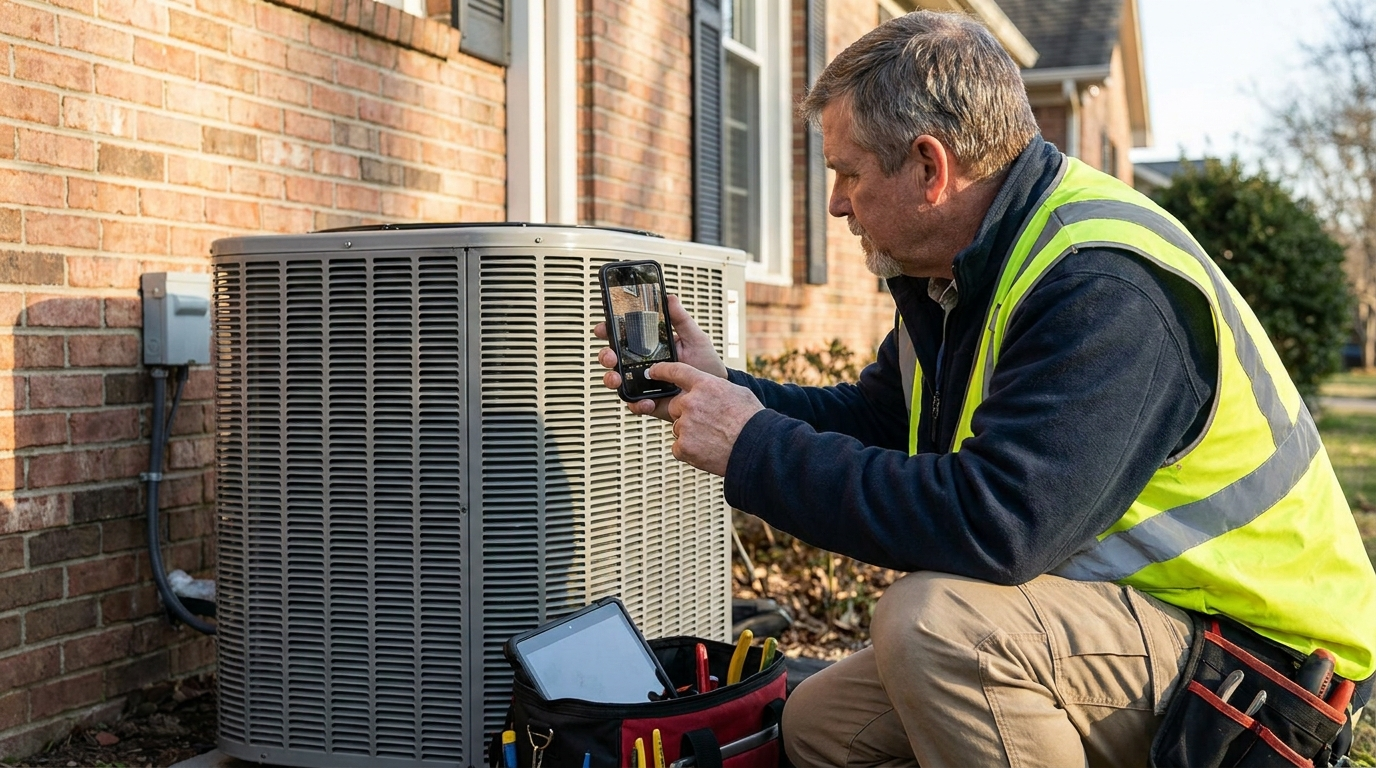
Customers approve repairs they can see. A photo of an entire condenser tells a homeowner nothing, but a pinned close-up of the exact failed capacitor, with a one-line note, makes the diagnosis obvious. Good documentation isn't paperwork; it's how you close the repair.
Mark the exact part, not just the unit
Take a photo of the unit, then drop a pin on the precise component that failed and attach the close-up. The customer sees what you see, and your office gets a record of what was found and fixed.
Document the things that drive approvals and protect you later:
- Failed or worn components
- Corrosion and refrigerant leaks
- Electrical and wiring issues
- Ductwork problems
- Install details and clearances
Justify the repair visually
When a tech says a part is bad, that's an opinion. When there's a pinned photo of the corrosion with a note, that's evidence. Visual proof shortens the conversation and reduces the "let me get a second quote" delay. For more on this, read Visual Proof That Gets Estimates Approved.
Document installs and service the same way
A pinned record of what was replaced and verified is useful long after the truck leaves, for warranty questions, for the next tech who services the unit, and for the customer who forgot what was done.
Keep the office in the loop
Share the report so dispatch and billing work from the same evidence the tech captured in the field. Nobody has to chase down "what actually happened on that call."
See how it fits a service workflow in Elevations for HVAC.